


Doppa — Black & Colourful Children’s Yoke Vest Knitting Kit
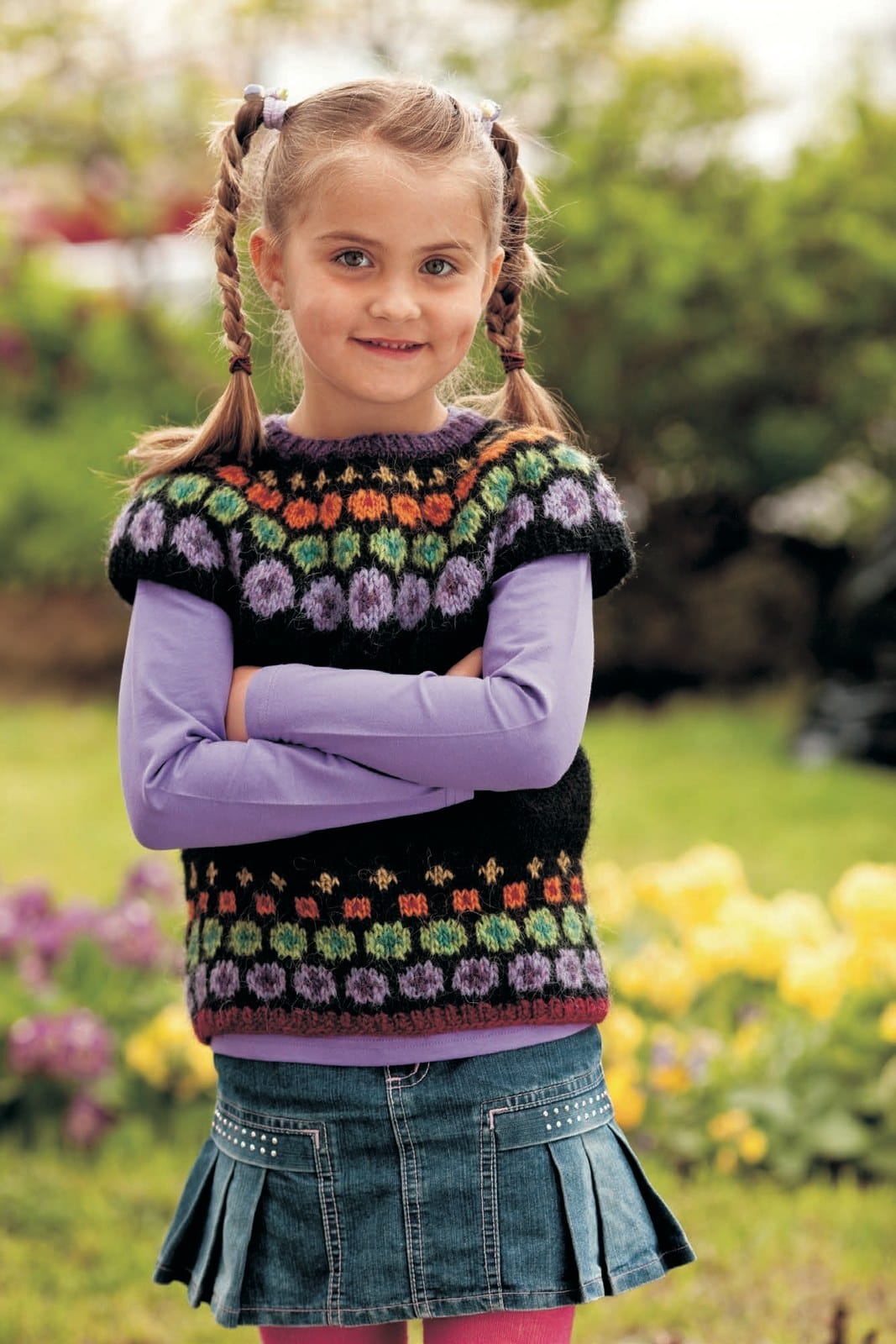
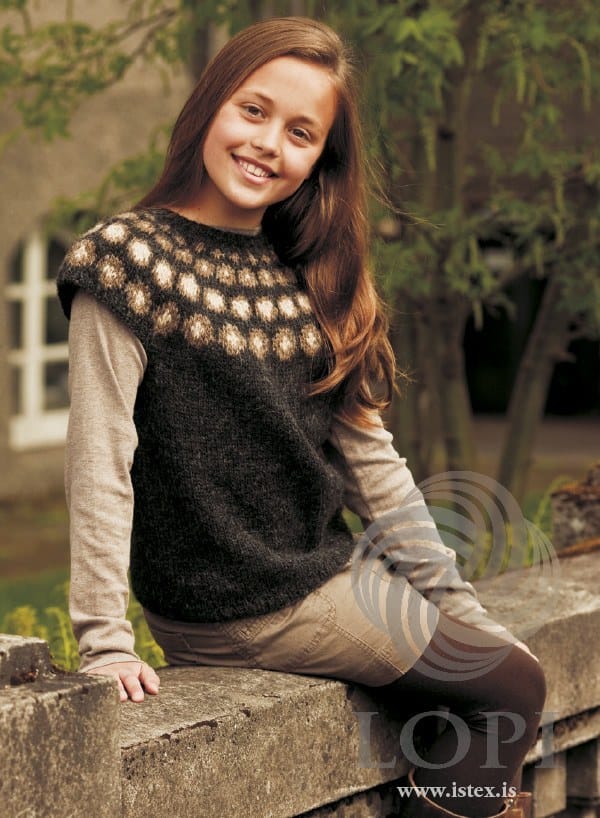
Children’s top-down vest with a dotted round yoke and cap sleeves · black with seven colours, and a dot border above the hem · three colours replaced (see below) · ages 6–12
- Free shipping over $149 — US, Canada & Europe
- US & Canada — duties & taxes settled at checkout
- Ships worldwide from Iceland with DHL Express, fully tracked
- 11 balls of Léttlopi in 8 colours
- Lopi 29, no. 9 — Védís Jónsdóttir
- Ages 6–12 · chest 70–80 cm
Overview
What's in the kit
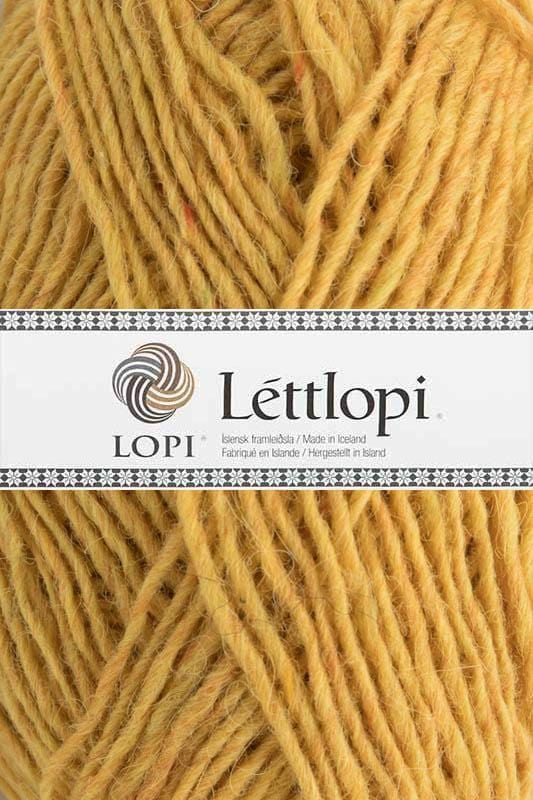
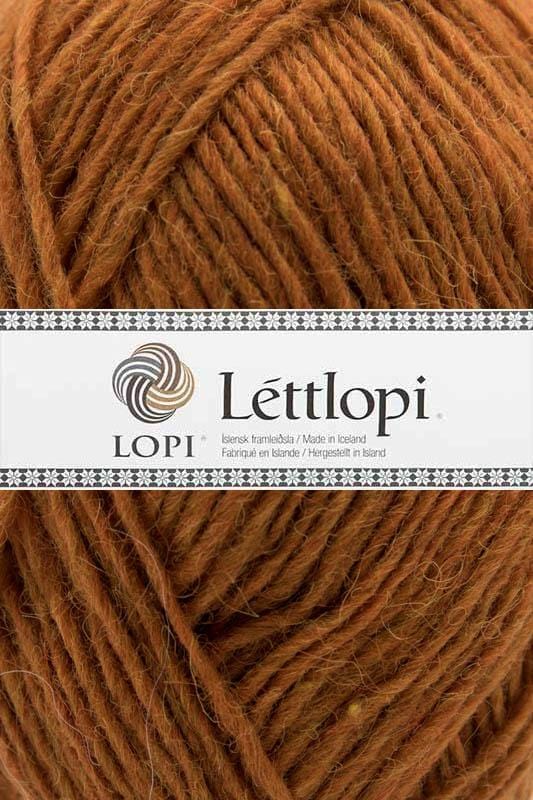
Doppa — dot. Védís Jónsdóttir’s children’s vest from Ístex’s Lopi 29, in its colourful version: black Léttlopi with rows of dots round the yoke — small mimosa flowers, apricot squares with garnet centres, spring green dots with lagoon centres, and big milkyway dots with violet centres — and the same rows again as a border above a garnet red hem rib. The neck rib is violet. It is knitted from the neck down in one piece, with short ribbed cap sleeves, so it is easy to try on as you go. Three of the pattern’s colours are no longer made: this kit has 1703 mimosa in place of the mustard (9264), 1704 apricot in place of the orange (1410), and 1702 milkyway in place of the lilac (1413).
Included
- Icelandic Léttlopi wool yarn — yarn for the largest size is included, so every size is covered
- Knitting pattern in English (PDF) — emailed right after purchase
- ADDI knitting needles — only if you choose the kit with needles
Léttlopi — 50 g balls · ages 6 (8 10 12) years
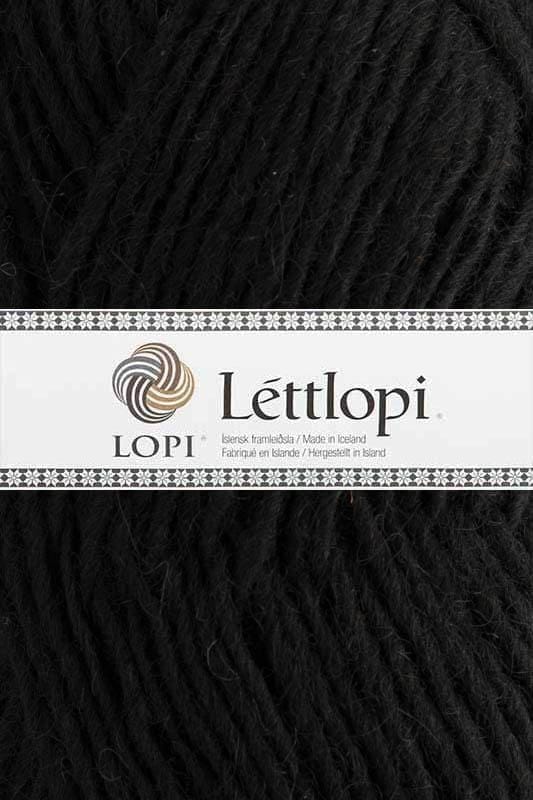
A 0059 Black — 3 (3 4 4)
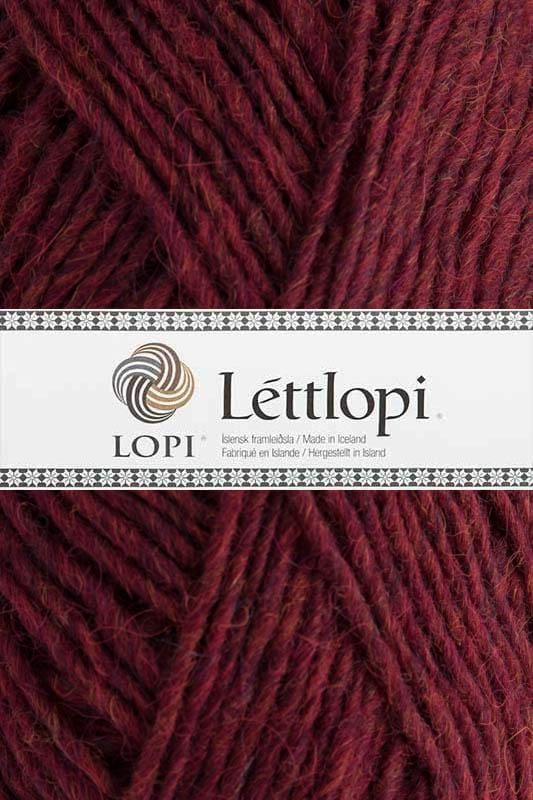
B 1409 Garnet Red — 1 (1 1 1)
C 1703 Mimosa (in place of 9264 mustard) — 1 (1 1 1)
D 1704 Apricot (in place of 1410 orange) — 1 (1 1 1)
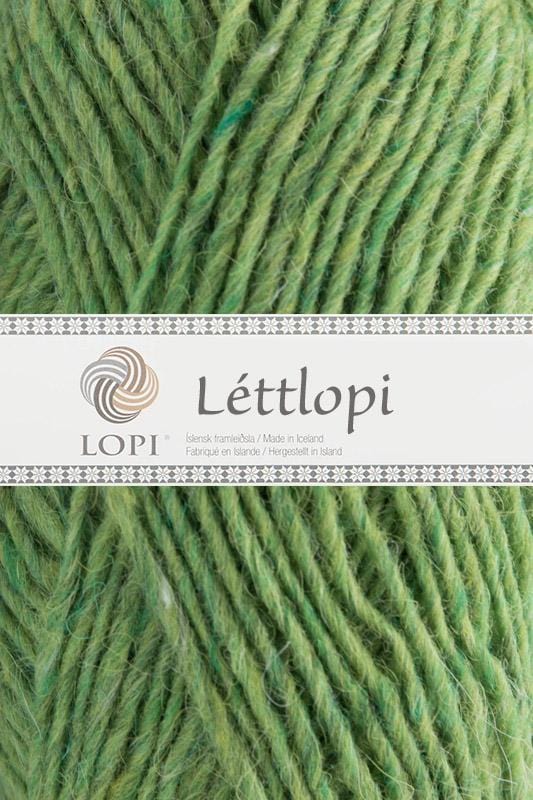
E 1406 Spring Green Heather — 1 (1 1 1)
F 9423 Lagoon Heather — 1 (1 1 1)
G 1702 Milkyway (in place of 1413 lilac) — 1 (1 1 1)
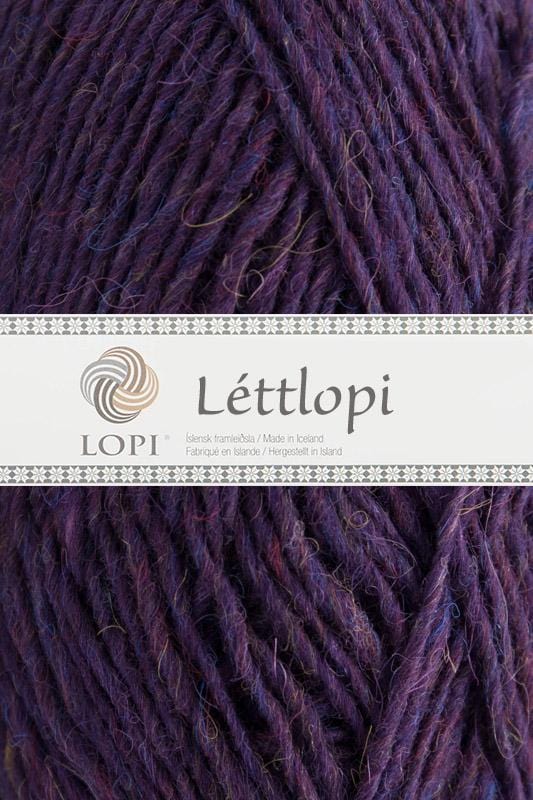
H 1414 Violet Heather — 1 (1 1 1)
Sizes
| 6 yrs | 8 yrs | 10 yrs | 12 yrs | |
|---|---|---|---|---|
| Chest | 70 cm 27½″ |
73 cm 28¾″ |
76 cm 30″ |
80 cm 31½″ |
| Length to underarm | 26 cm 10¼″ |
29 cm 11½″ |
32 cm 12½″ |
35 cm 13¾″ |
Gauge
18 sts × 24 rows = 10 cm (4″) in stocking stitch on 4.5 mm needles.
Needles used in the pattern (included when you choose the kit with needles)
4.5 mm (US 7) circular needles, 40 and 60 cm — the 40 cm for the top of the yoke, the 60 cm as it widens and for the body
3.5 mm (US 4) circular needle, 60 cm, for the hem rib
3.5 mm (US 4) double-pointed needles for the neck rib
Not included
A tapestry needle for weaving in the ends and for the few duplicate stitches that strengthen the armhole corners.
How it is knitted
Knitted from the top down in one piece, in the round. The neck starts with 4 rounds of K1, P1 rib in violet heather on 3.5 mm double-pointed needles. The yoke is knitted in black on the 4.5 mm circular from a 33-round chart of dots, with five increase rounds worked into the chart — from 72 (75, 78, 81) stitches at the neck to 192 (200, 208, 216) — changing to the 60 cm circular as it widens; the smaller sizes leave out a few marked rounds. Next, the back and front are knitted while the stitches over each arm are worked in K1, P1 rib for 3 rounds and then bound off in rib — these are the short cap sleeves. 8 (8, 9, 9) stitches are cast on under each arm, and the body is knitted straight down in black to 15.5 (18.5, 21.5, 24.5) cm from the underarm, then a 22-round border of the same dots (chart 2), and finished with 1 round of stocking stitch and 4 rounds of K1, P1 rib in garnet red on 3.5 mm. Last, a few duplicate stitches strengthen each armhole corner where body and yoke meet.
Design: Védís Jónsdóttir — pattern from Lopi No. 29 (no. 9), Ístex.
More info — yarn, care, shipping & returns
Genuine Ístex lopi — the same wool Icelanders knit with, spun in Iceland from the fleece of Icelandic sheep. No substitutes.
Care of the finished garment — air out between wears; hand wash cool and dry flat. Full care guide
Shipping — DHL Express worldwide, fully tracked. Rates & times
US & Canada duties — collected at checkout; nothing to pay on delivery. How it works
Returns — unused kits in original condition; see our return policy.
Choose options
Why you'll love it
- Rows of dotsSmall flowers, squares and dots in seven colours on black, round the yoke and again above the hem.
- Top downKnitted from the neck down in one piece, so it is easy to try on as you go.
- Cap sleevesThree rounds of rib over the arm stitches make short bands at the shoulders.
- Garnet hemThe dot border ends in garnet red K1, P1 rib; the neck rib is violet.
Good to know