
Article: The Lopapeysa Story: History, Meaning and How to Spot a Real One
The Lopapeysa Story: History, Meaning and How to Spot a Real One
Short answer: A lopapeysa is the traditional Icelandic wool sweater, instantly recognised by the decorative yoke pattern that circles the neck and shoulders. It is knitted in the round from Icelandic lopi wool, which makes it light, breathable and remarkably warm. Despite feeling timeless, the lopapeysa is surprisingly modern: it emerged only in the mid-20th century and became a symbol of Icelandic identity after independence. Here is the full story, what makes it special, and how to spot an authentic one.
In this article
- What is a lopapeysa?
- The surprising history of the lopapeysa
- Why is it so warm?
- How to spot an authentic lopapeysa
- How to wear and care for it
- Frequently asked questions

What is a lopapeysa?
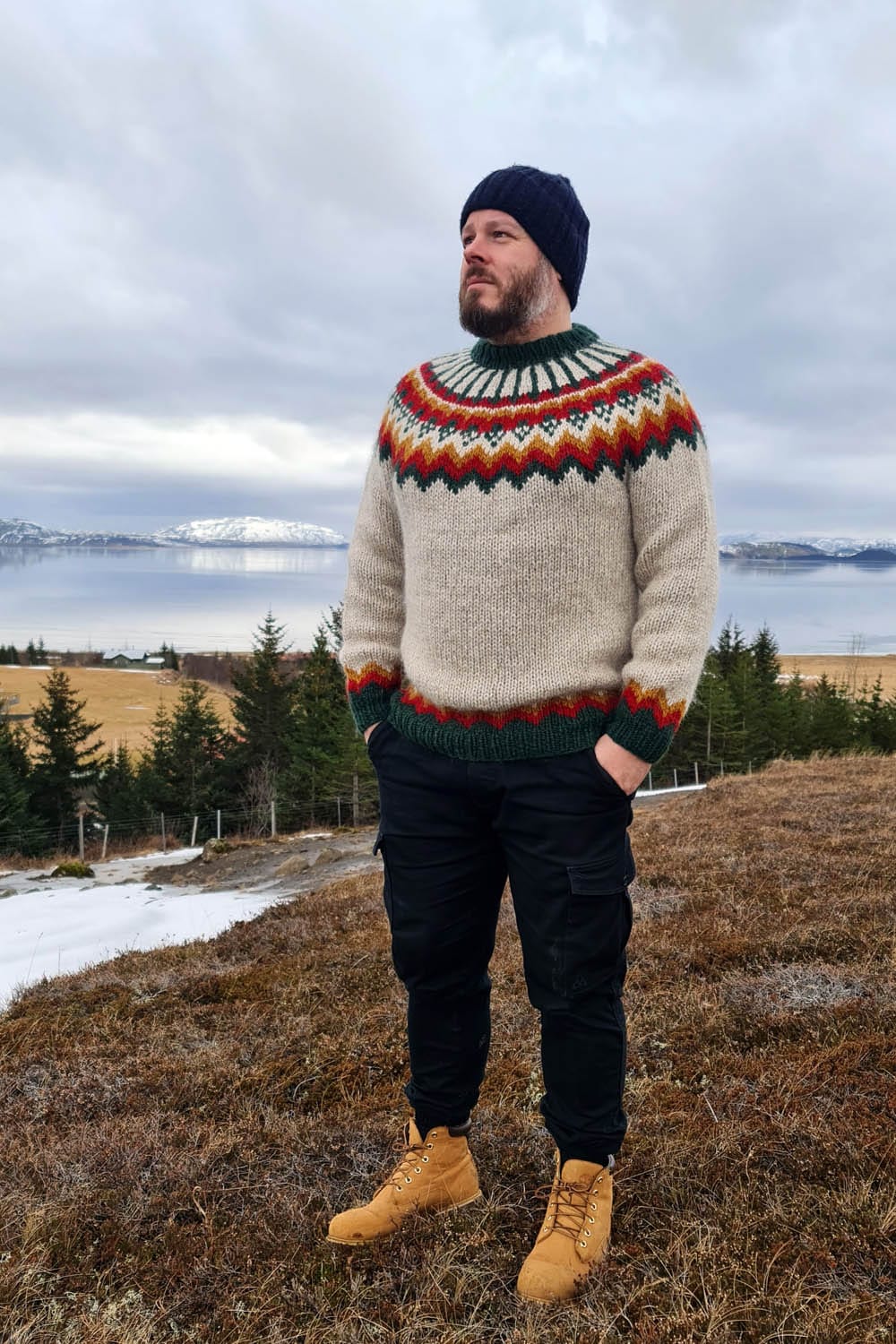
Lopapeysa (pronounced roughly "LOH-pa-pay-sa", plural lopapeysur) simply means "lopi sweater" in Icelandic: lopi is the soft Icelandic wool it is knitted from, and peysa means sweater or jumper. Its signature feature is the yoke, a wide band of geometric pattern that radiates out around the neck. The body is knitted seamlessly in the round, so there is no front or back unless a zipper or buttons are added to turn it into a cardigan.
Beyond the look, the lopapeysa is built for the Icelandic climate: warm, water-resistant and breathable, the kind of sweater you can wear hiking a glacier in the morning and around town in the evening.
The surprising history of the lopapeysa
Here is the twist most people do not expect: the lopapeysa is not ancient. It appeared only in the early-to-mid 20th century, at a time when cheaper imported clothing had pushed aside older Icelandic garments and people were looking for new ways to use the country's abundant native wool.
Its now-iconic yoke design also has roots beyond Iceland. The circular yoke can be traced to a pattern called "Eskimo", published by the Norwegian designer Annichen Sibbern in the magazine URD in 1930, which was itself inspired by the beaded yoke of a Greenlandic Inuit costume. Icelandic knitters adopted the idea, paired it with local lopi wool, and made it their own.
What turned a practical sweater into a national emblem was timing. In the decades after Iceland gained full independence from Denmark in 1944, the lopapeysa was embraced as a homegrown symbol of identity, a genuine "invented tradition". It saw a first wave of popularity then, and a second surge in the early 21st century as Icelanders reaffirmed their culture in a globalised world. Today it is worn by farmers and presidents alike.

Why is it so warm?
The secret is the wool. Icelandic sheep produce a dual-coated fleece: a long, glossy, water-shedding outer fibre called tog, and a soft, airy, insulating inner fibre called þel. Spun together into lopi, they trap a lot of air, which is why a lopapeysa is so warm for its weight while still breathing well and shrugging off light rain. If you want to go deeper on the wool itself, see our guide to the origins of the Icelandic wool sweater.
How to spot an authentic lopapeysa
"Icelandic-style" sweaters are sold all over the world, but a genuine lopapeysa has a few tells. Use this quick checklist before you buy.
| Look for | Why it matters |
|---|---|
| 100% Icelandic wool | The dual-coated fleece is what gives the warmth and water resistance. Acrylic blends do not perform the same. |
| Knitted in Iceland | Authentic lopapeysur are made in Iceland, very often hand-knitted by local knitters. |
| Seamless yoke, knit in the round | The patterned yoke should be knitted into the sweater, not printed or stitched on afterwards. |
| A real maker or brand | Genuine sweaters are sold by Icelandic makers and stores, not generic souvenir labels. |

Authentic lopapeysur in 100% Icelandic wool, knitted in Iceland. Browse classic and modern patterns.
How to wear and care for it
A lopapeysa works as an outer layer in cool weather or a mid-layer when it is truly cold. Wear it over a t-shirt or a thin base layer; wool against bare skin can feel a little rustic, and a layer underneath also keeps the sweater fresher for longer.
Caring for it is easier than you might think, because wool is naturally self-cleaning. Air it out rather than washing after every wear. When it does need a clean, hand wash gently in cool water with a wool-friendly detergent, do not wring or scrub, press out the water, then dry it flat and reshape it. Avoid the tumble dryer, which can felt and shrink the wool. Treated well, a good lopapeysa lasts for decades.

The most-loved men's lopapeysur, hand-knitted in Iceland from pure wool.

Favourite women's lopapeysur in classic and contemporary colourways.
Prefer to make your own? You can knit a lopapeysa from scratch with a kit and Icelandic yarn. Start with our guide to choosing between Léttlopi and Álafoss Lopi, or browse Icelandic knitting kits.
Frequently asked questions
How do you pronounce lopapeysa?
Roughly "LOH-pa-pay-sa". The plural is lopapeysur. It combines lopi (Icelandic wool) and peysa (sweater).
Are lopapeysur really handmade?
Authentic ones very often are. Many genuine Icelandic sweaters are hand-knitted by local knitters in Iceland, which is part of why each one is a little unique and why they carry a premium over mass-produced lookalikes.
How much does a lopapeysa cost?
A genuine hand-knitted Icelandic wool sweater is a premium, long-lasting garment, and typically costs in the region of $385 to $570 depending on the pattern, size and yarn. Knitting one yourself from a kit can cost less, with the trade-off of your time.
How do you wash a lopapeysa?
Air it between wears, and when needed, hand wash gently in cool water with a wool detergent. Do not wring it; press out the water, dry it flat and reshape it. Keep it out of the tumble dryer to avoid shrinking or felting.
What should you wear under a lopapeysa?
A t-shirt or thin base layer is ideal. It makes the wool more comfortable against the skin and helps keep the sweater clean, so you can wash it less often.
Is the lopapeysa really an old Icelandic tradition?
It is a beloved tradition, but a relatively recent one. The sweater took its modern form in the 20th century and became a national symbol after Iceland's 1944 independence, drawing on a yoke design with Scandinavian and Greenlandic influences.
Wear a piece of Iceland
Explore authentic, hand-knitted lopapeysur in 100% Icelandic wool. Knitted in Iceland and shipped worldwide.
Shop Icelandic sweaters →Authentic Icelandic wool, shipped worldwide.

Leave a comment
This site is protected by hCaptcha and the hCaptcha Privacy Policy and Terms of Service apply.